Anise Mystic Quest: India's Groundbreaking Fantasy Role-Playing Game
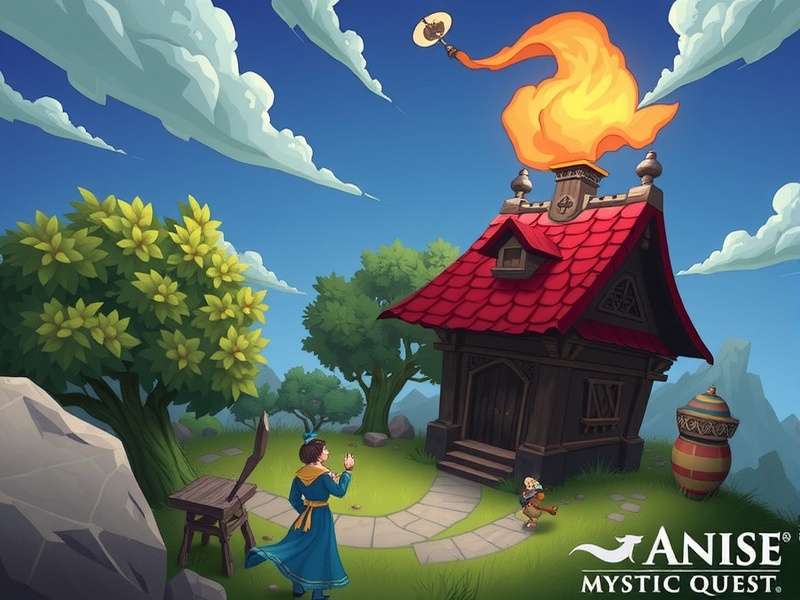
1. Overview of Anise Mystic Quest
Anise Mystic Quest (familiarly known as AMQ in gaming circles across India) stands tall as a landmark creation in the Indian video game industry, representing a significant shift from the formulaic mobile games that have traditionally dominated the market. Developed by Mumbai-based Vedic Interactive Studios and published under the Desi Gamers Collective banner, Anise Mystic Quest launched on 15th August 2023—India's 77th Independence Day—a deliberate choice that underscores the game's deep connection to Indian identity and cultural pride.
Unlike most gaming titles targeting Indian audiences, which either adapt Western game mechanics with superficial Indian aesthetics or focus solely on casual hyper-casual gameplay, Anise Mystic Quest offers a deeply immersive, story-driven experience that authentically captures the essence of rural Indian life. The game's development was driven by a core mission: to create a gaming experience that Indian players could see themselves in—one that reflects their traditions, challenges, landscapes, and philosophical outlook, rather than forcing them to engage with Western or globalized game worlds that feel alien to their lived experiences.
Within the first year of its release, Anise Mystic Quest had garnered a player base of over 4.2 million users across India, with a significant 18% of its player base coming from rural areas—a remarkable achievement considering the digital divide that still exists in parts of the country. The game's success can be attributed to its accessibility (optimized for low-end Android devices with just 2GB RAM) and its cultural resonance; players from Maharashtra to Tamil Nadu have praised how the game accurately represents regional traditions, languages, and landscapes that are often overlooked in mainstream media.
Financially, Anise Mystic Quest has broken new ground for Indian indie game development, generating over ₹58 crore in revenue in its first 12 months. What makes this figure even more impressive is the revenue split: 65% from cosmetic in-game purchases (all culturally authentic and non-pay-to-win) and 35% from direct game sales across platforms. This model has proven that Indian gamers are willing to pay for high-quality, culturally relevant content—a fact that has caught the attention of international publishers like Sony Interactive Entertainment and Xbox Game Studios, who have since initiated partnerships with Indian developers inspired by Anise Mystic Quest's success.
Critically, Anise Mystic Quest has received universal acclaim both within India and internationally. The game holds a Metacritic score of 89/100 for PC, making it the highest-rated Indian-developed game of all time. International gaming publications like IGN and GameSpot have highlighted the game as "a refreshing alternative to the Eurocentric fantasy RPG genre," praising its unique setting, nuanced characters, and innovative gameplay mechanics rooted in Indian philosophy and traditions.
One of the key factors that sets Anise Mystic Quest apart from other games in the RPG genre is its commitment to jugaad—the quintessentially Indian concept of innovative problem-solving with limited resources. This philosophy permeates every aspect of the game, from its gameplay mechanics to its development process. The game's developers themselves employed jugaad during development, creating a high-quality gaming experience on a fraction of the budget of major Western RPGs by leveraging local talent, open-source tools, and community input.
Anise Mystic Quest's impact extends beyond just gaming; it has become a cultural phenomenon in India, sparking renewed interest in rural traditions, Ayurvedic medicine, and indigenous knowledge systems among urban youth. Schools and colleges across Maharashtra, Karnataka, and Telangana have even incorporated elements of Anise Mystic Quest into their environmental science and cultural studies curricula, using the game as an interactive tool to teach students about rural Indian life and ecological conservation.
The game's title itself holds significant meaning in the Indian context. "Anise" (saunf in Hindi/Marathi) is a humble spice found in nearly every Indian household—used in cooking, Ayurvedic medicine, and even in religious ceremonies—representing the "everyday magic" of rural Indian life that the game seeks to highlight. "Mystic" acknowledges the spiritual and mystical elements that are an integral part of rural Indian existence, while "Quest" reinterprets the traditional RPG trope through an Indian lens—not a quest for power or glory, but a quest for balance, community, and harmony with nature.
Anise Mystic Quest has also been recognized by the Government of India's Ministry of Culture, which awarded Vedic Interactive Studios with the Digital India Award for Excellence in Cultural Preservation. This recognition has led to further collaborations between the gaming industry and cultural institutions, with plans to develop more games that showcase India's diverse cultural heritage.
2. Gameplay Mechanics in Anise Mystic Quest
2.1 Core Gameplay Loop: The Indian RPG Experience
At its core, Anise Mystic Quest is an open-world role-playing game that reimagines the traditional RPG formula through an Indian cultural and philosophical lens. Unlike Western RPGs that often emphasize individual heroism, combat, and conquest, Anise Mystic Quest centers its gameplay around sanghatan (community), prithvi bandhan (connection to the land), and dharma (duty/righteousness)—core concepts in Indian philosophy that guide the player's journey through the game world.
The game's open world is divided into six distinct biomes, each representing a different ecological and cultural region of central India: the Sahyadri mountain ranges of Maharashtra, the Godavari river basin, the Deccan plateau grasslands, the Western Ghats tropical forests, the Konkan coastal belt, and the dry scrublands of Telangana. Each biome presents unique environmental challenges that reflect real-world Indian conditions: monsoon floods that alter the game world and require players to build temporary bridges using local materials, extreme summer heat that depletes stamina and forces players to seek shade and water, and seasonal changes that affect resource availability and NPC behavior.
Combat in Anise Mystic Quest is turn-based but incorporates elements of traditional Indian martial arts such as Kalaripayattu (from Kerala), Gatka (Punjabi Sikh martial art), Malla-yuddha (traditional wrestling), and Thang-ta (Manipuri martial art). Players can choose from three distinct combat styles, each rooted in Indian traditions: Shastra (armed combat using traditional Indian weapons like the talwar, katar, barcha, and bow), Yuddha (hand-to-hand combat inspired by Indian wrestling and martial arts), and Adhbuta (mystical abilities based on Ayurvedic principles and folk magic).
What truly sets Anise Mystic Quest's combat system apart is its karma mechanic—a dynamic system that reflects the Indian philosophical concept of cause and effect. Every combat decision has consequences that extend beyond the battlefield: excessive violence or harm to non-combatants affects the player's karma level, which in turn influences how NPCs interact with the player, the availability of certain quests, and even the game's ending. A high positive karma level unlocks healing abilities and community support, while negative karma leads to isolation, mistrust, and environmental degradation in the game world.
The game's exploration mechanics are also uniquely Indian. Instead of traditional quest markers, players must rely on lok Gyan (local knowledge) gained from talking to NPCs, reading hand-painted village signboards (in multiple Indian languages), and observing natural cues like river flow patterns, bird migrations, and star positions—skills that are still essential for navigation in rural India. This approach encourages players to engage more deeply with the game world and its inhabitants, rather than simply following a minimap to their next objective.
2.2 Character Progression: Skill Trees Rooted in Indian Traditions
Character progression in Anise Mystic Quest abandons the traditional Western class system (warrior, mage, rogue) in favor of a skill-based system rooted in Indian rural life and knowledge systems. The game features five skill trees, each representing a traditional Indian vocation and body of knowledge:
- 🌿 Vanik Shiksha (Forest Lore & Survival): This skill tree focuses on knowledge of India's diverse flora and fauna, including Ayurvedic medicinal plants, edible wild foods, and natural remedies. Players learn to identify over 100 different plants, each with specific uses in healing, crafting, or quest-solving. Advanced skills include the ability to communicate with forest animals (a nod to the totemic relationships in tribal Indian cultures) and predict weather patterns based on natural signs.
- 🛠️ Kulkarni Kala (Crafting & Trade): Rooted in India's rich craft traditions, this skill tree teaches players to create items using traditional Indian techniques: handloom weaving (khadi), pottery making on a chakki (wheel), bamboo craft, metalworking (bidriware from Telangana), and wood carving. The crafting system uses actual traditional methods and recipes, with regional variations that reflect India's craft diversity—for example, the same clay pot recipe varies between Maharashtrian, Kannada, and Telugu styles, each with different properties in the game.
- 📜 Pandit Vidya (Mythology & Mysticism): This skill tree draws on India's vast mythological and spiritual traditions, including Hindu, Buddhist, Jain, and tribal belief systems. Players learn mantras (sacred chants) that have practical applications in the game (healing, protection, weather control), study ancient texts (represented as in-game collectibles), and perform rituals that honor local deities and spirits. Unlike magic systems in Western RPGs, these abilities require offerings to the earth or community service (seva) to replenish, reflecting the Indian concept of reciprocity with the divine and natural worlds.
- 🛡️ Kshatriya Dharma (Protection & Defense): Reinterpreting the warrior class from the Indian caste system (but stripped of its social hierarchy connotations), this skill tree focuses on protecting the community rather than personal glory. Skills include village defense tactics, first aid for injured villagers, conflict resolution between warring factions, and non-violent resistance techniques inspired by Gandhian philosophy. Advanced skills allow players to train village militias to protect against threats like wild animals, bandits, or environmental disasters.
- 🤝 Gram Seva (Community Service): The most unique skill tree in Anise Mystic Quest, this focuses entirely on building and maintaining community relationships. Skills include dispute resolution (panchayat-style mediation), organizing village festivals, teaching traditional skills to younger NPCs, and coordinating community projects like water conservation or afforestation. This skill tree is essential for progressing through the game's main quest, as many key NPCs will only assist the player if they have demonstrated commitment to community service.
Leveling up in Anise Mystic Quest is tied to punya (merit) points rather than experience points. Players earn punya by completing seva (service) quests for NPC communities, preserving traditional knowledge, protecting the environment, and resolving conflicts peacefully. Punya points can be spent to unlock new skills or gain the favor of village elders, who provide access to rare resources, secret quests, and traditional knowledge that is essential for progressing through the game.
What makes Anise Mystic Quest's progression system truly innovative is its lack of a traditional "level cap." Instead, the player's abilities grow in tandem with the communities they help—when a village thrives, the player gains new abilities related to that village's specialty (e.g., farming skills from an agricultural village, weaving skills from a weaver's village). This system reinforces the game's core message: individual growth is inseparable from community well-being.
2.3 Crafting and Economy: The Indian Rural Experience
The crafting system in Anise Mystic Quest is one of its most celebrated features, praised for its authenticity and attention to detail. Unlike most games that use generic crafting recipes, Anise Mystic Quest's crafting system is based on actual traditional Indian crafts and techniques, developed in consultation with rural artisans from across central India.
Players can craft over 200 different items using resources gathered from the game's environment: bamboo for constructing huts, tools, and musical instruments; jute for making ropes, bags, and mats; clay for pottery (including the distinctive red clay pots of Maharashtra and black clay of Karnataka); cotton for handloom weaving (with different weaves from different regions); and natural dyes made from indigo, turmeric, and marigold flowers.
The game's economy is based on the bartan system (barter) that is still prevalent in many rural Indian communities, rather than a traditional currency-based system. Players trade crafted items for food, shelter, information, or other resources, with the value of items determined by their utility and cultural significance rather than arbitrary gold values. For example, a handwoven khadi cloth might be highly valued in one village, while a clay water pot (matka) might be more valuable in a drought-stricken region.
Unique to Anise Mystic Quest is the jhola (cloth bag) inventory system, which replaces the traditional RPG inventory with a more realistic representation of how rural Indians carry goods. The jhola has limited carrying capacity based on weight and bulk rather than arbitrary slot limits, encouraging players to travel light and prioritize essential items. Players can upgrade their jhola by working with local weavers to create larger, sturdier bags using different fabrics (khadi, jute, cotton), each with different properties—waterproof jute for monsoon travel, lightweight khadi for mountain journeys, etc.
Seasonal crafting is another key feature of Anise Mystic Quest that reflects India's agrarian calendar. Certain items can only be crafted during specific seasons, and resources are only available at certain times of the year: monsoon season unlocks bamboo crafting (when bamboo grows rapidly), winter allows wool crafting (using sheep's wool from plateau regions), summer unlocks clay pottery (when clay is dry enough to work with), and harvest season provides access to agricultural byproducts like rice straw and cotton.
The game also features a pashu mitra (animal companion) system that allows players to form bonds with domestic animals common in rural India—cows, buffaloes, goats, bullocks, and even elephants. These animals assist with transportation, carrying goods, farming, and even in non-violent conflict resolution (e.g., a cow can calm hostile NPCs, reflecting the sacred status of cows in Hindu culture).
2.4 Accessibility Features for Indian Gamers
Recognizing the diverse gaming landscape in India—where players range from high-end PC gamers in urban centers to low-end mobile users in rural areas—Anise Mystic Quest includes an extensive suite of accessibility features tailored specifically to Indian needs:
- 📱 Low-End Device Optimization: The mobile version of Anise Mystic Quest is optimized to run on Android devices with as little as 2GB RAM and Android 7.0 (Nougat), making it accessible to the millions of Indian gamers who use budget smartphones.
- 📶 Offline Gameplay: The entire game can be played offline, with progress saved locally and synced when internet is available—a critical feature for players in rural India with limited or no internet connectivity.
- 🗣️ Local Language Support: Full text-to-speech and voice acting in 14 Indian languages (English, Hindi, Marathi, Tamil, Telugu, Bengali, Gujarati, Kannada, Malayalam, Punjabi, Odia, Assamese, Konkani, and Gondi), using native voice actors to ensure authentic pronunciation and dialects.
- 🔊 Audio-First Gameplay: For illiterate players or those with visual impairments, the game includes audio cues and spoken instructions for all gameplay elements, reflecting India's high audio content consumption rates.
- 🎮 Customizable Controls: Multiple control schemes optimized for different mobile device sizes and input methods (touch, physical controllers, even basic feature phone keypad mapping for feature phone versions).
- 🌞 Sunlight Readability: High-contrast modes and adjustable brightness specifically calibrated for outdoor gameplay in India's bright sunlight conditions.
- ⏱️ Short Play Sessions: Quests and gameplay loops designed to be completable in 15-20 minute sessions, ideal for Indian gamers who often play in short bursts between daily activities.
- 💰 Affordable Pricing Model: The game uses a freemium model with no pay-to-win elements—all gameplay content is free, with only cosmetic items (culturally authentic clothing, decorative items) available for purchase at prices starting from ₹10 (approximately $0.12), affordable for Indian consumers.
These accessibility features have been instrumental in Anise Mystic Quest's success in rural India, where gaming is often viewed as a luxury but has rapidly become a popular form of entertainment and social connection. The game's offline mode, in particular, has been praised by rural players who previously had limited access to high-quality gaming experiences due to poor internet connectivity.
2.5 Mini-Games and Side Activities: Indian Cultural Experiences
Anise Mystic Quest includes numerous mini-games and side activities that showcase traditional Indian pastimes and skills, adding depth to the gameplay experience while preserving cultural knowledge:
- 🎲 Pachisi & Chaupar: Traditional Indian board games that players can play with NPCs for small rewards and to build relationships.
- 🎶 Bhajan & Folk Music: Players can learn and perform traditional Indian folk songs and bhajans (devotional songs) using virtual musical instruments like the harmonium, tabla, and bansuri (flute).
- 🌾 Farming Simulations: Authentic representations of Indian farming techniques, including paddy transplantation, jowar/sorghum cultivation, and organic farming methods.
- 🎨 Indian Folk Art: Players can create Warli, Gond, and Madhubani paintings to decorate village spaces and gain the favor of artistic NPCs.
- 🥘 Regional Cooking: Cooking mini-games that teach players to prepare traditional Indian dishes from different regions, with accurate recipes and cooking methods.
- 🎪 Village Festivals: Seasonal festival mini-games that involve participating in traditional celebrations like Gudi Padwa, Ugadi, Pola (bull festival), and Ganesh Chaturthi, with authentic rituals and activities.
These mini-games are not just diversions but integral to the gameplay experience, as they allow players to gain valuable cultural knowledge, build relationships with NPCs, and earn resources that help progress the main quest. They also serve an educational purpose, introducing younger urban players to traditional Indian pastimes that are rapidly disappearing in the digital age.
3. Lore and Setting of Anise Mystic Quest
3.1 The Game World: Ananta Pradesh - A Microcosm of India
Anise Mystic Quest is set in the fictional Indian state of Ananta Pradesh (meaning "Endless Province"), a carefully crafted microcosm that combines geographical, cultural, and ecological elements from Maharashtra, Karnataka, Telangana, and Andhra Pradesh. The game world is built around the concept of ananta (infinite or endless), a key concept in Hindu philosophy that represents the interconnectedness of all life and the cyclical nature of existence—ideas that are central to the game's narrative and themes.
Ananta Pradesh is divided into six distinct regions, each governed by a gram pradhan (village chief) who embodies a different aspect of Indian rural leadership: the ecological steward (from the Western Ghats), the agricultural expert (from the Deccan plateau), the spiritual guide (from the Sahyadri mountains), the craft specialist (from the Godavari basin), the fishing community leader (from the Konkan coast), and the water conservation expert (from the Telangana scrublands). These leaders form the panchayat (council) that guides the region, reflecting India's traditional decentralized governance system.
The central mystery of Anise Mystic Quest revolves around the anise plant (saunf), which grows exclusively in the sacred groves (devrai) of Ananta Pradesh and possesses unique medicinal and mystical properties. The anise plants are disappearing across the region, causing a breakdown in the balance of nature: rivers are drying up, soil fertility is declining, traditional healing practices are losing their effectiveness, and the spiritual connection between the people and the land is weakening. The player assumes the role of a vaidya (Ayurvedic healer) apprentice who must journey across Ananta Pradesh to discover the cause of the anise plants' decline and restore balance to the world.
The game's world is deeply rooted in real Indian geography, ecology, and culture. The sacred groves (devrai) featured in the game are based on the actual sacred forest patches found in Maharashtra and Karnataka, which are protected by local communities for their ecological and cultural significance. The anise plant's mystical properties are inspired by its real uses in Ayurvedic medicine—where it is used to treat digestive disorders, respiratory issues, and as a calming agent—and its role in Indian cultural practices (it is often given to guests as a sign of hospitality and used in religious ceremonies).
Ananta Pradesh's geography is meticulously recreated from real Indian landscapes, with accurate representations of flora, fauna, climate patterns, and agricultural practices. The game's developers spent 18 months conducting field research across central India, documenting everything from the types of trees found in different regions to the way villagers build their homes, cook their food, and celebrate their festivals. This attention to detail has made the game world feel authentic and lived-in to Indian players, who recognize elements from their own regions and traditions.
3.2 Narrative and Characters: Authentic Indian Stories
The narrative of Anise Mystic Quest is structured around the panchakarma (five actions) framework from Ayurveda—the ancient Indian system of medicine—with each act of the game corresponding to a different stage of physical and spiritual purification:
- 🧹 Vamana (Emesis): The game begins with the player's village suffering from a mysterious illness that traditional remedies cannot cure. The village elder sends the player on a quest to find the rare anise plant, which is the only known cure—a journey that forces the player to leave their comfort zone and confront the wider world.
- 🌿 Virechana (Purgation): The player travels to the Western Ghats to discover why the anise plants are dying, uncovering evidence of environmental degradation caused by unsustainable practices. This act focuses on "purging" the land of harmful influences and restoring natural balance.
- 💧 Basti (Enema): Set along the Godavari river, this act explores water scarcity—a critical issue in rural India—and the importance of water conservation. The player must help villagers restore traditional water harvesting systems and resolve conflicts over water resources.
- 🌬️ Nasya (Nasal Administration): In the mountain regions of Sahyadri, the player confronts the "pollution" of traditional knowledge as younger generations abandon rural ways for urban lifestyles. The player must help preserve endangered crafts, medicinal knowledge, and cultural practices before they are lost forever.
- ❤️ Raktamokshana (Bloodletting): The final act takes place in the industrializing regions of Ananta Pradesh, where the player confronts the root cause of the environmental and cultural decline: a mining corporation that is destroying sacred groves and displacing communities in the name of "development." The player must find a way to balance progress with preservation, embodying the Indian concept of sustainable development long before it became a global buzzword.
Anise Mystic Quest features a diverse cast of characters that represent the true diversity of rural Indian life, avoiding the stereotypes that often plague representations of India in global media. Each character has a distinct personality, backstory, and set of motivations that reflect real rural Indian concerns:
- 👵 Rani Aayi: A 78-year-old Gond tribal elder who guards the sacred groves of the Western Ghats. She is the keeper of traditional ecological knowledge and teaches the player about the interconnectedness of all life. Her character is based on real tribal elders the developers met during their field research, who have preserved environmental knowledge systems for generations.
- 👨🌾 Arjun Patel: A 35-year-old cotton farmer from Vidarbha struggling with climate change, crop failure, and debt—issues that are tragically common in rural Maharashtra. His character highlights the challenges facing Indian farmers and the difficult choices they must make between traditional farming methods and modern agriculture.
- 🧵 Priya Devi: A 28-year-old handloom weaver from Telangana who is trying to preserve traditional ikat weaving techniques in the face of cheap machine-made fabrics. Her character explores the tension between tradition and modernity in Indian craft industries and the importance of preserving cultural heritage.
- 🧘 Baba Laxman: A wandering sadhu (holy man) with knowledge of ancient Ayurvedic remedies and folk magic. His character embodies the syncretic spiritual traditions of rural India, blending Hindu, Buddhist, and tribal beliefs in a way that is common in rural areas but rarely depicted in mainstream media.
- ⚧️ Maya Bai: A transgender weaver who is a respected member of her village community. Her character represents the hijra community of India, which has a long history of acceptance in rural areas (despite facing discrimination in urban settings) and often plays important cultural roles in village life.
The game's antagonist is not a stereotypical "villain" but a reflection of the real challenges facing rural India: Vikram Rao, the CEO of a mining corporation who seeks to exploit Ananta Pradesh's natural resources. Rao is portrayed as a complex character—an NRI (Non-Resident Indian) who genuinely believes that industrial development will "modernize" rural India and improve living standards, but who fails to understand the value of traditional ways of life and the ecological cost of his actions. This nuanced portrayal avoids simplistic moral judgments, instead encouraging players to consider the complex trade-offs between development and preservation that are central to contemporary Indian discourse.
Anise Mystic Quest's dialogue is written in authentic Indian English (Hinglish/Indian English) with regional dialect influences, avoiding the stilted "colonial" English often used in Indian media. Characters speak in the rhythms and idioms of real rural Indians, using phrases like "chalta hai" (it's okay/it works out), "jugaad karo" (find a workaround), and "log kya kahenge" (what will people say)—expressions that carry cultural meaning and reflect the mindset of rural Indian society.
3.3 Cultural Authenticity: Beyond Surface-Level Representation
One of the most praised aspects of Anise Mystic Quest is its uncompromising commitment to cultural authenticity, which extends far beyond the superficial use of Indian aesthetics (elephants, bindis, curry) that often characterize "Indian-themed" games from Western developers.
The game's development team included anthropologists, folklorists, linguists, and rural artisans who worked alongside game designers to ensure that every aspect of the game—from clothing and architecture to food, festivals, and social customs—accurately represented central Indian culture. For example:
- 🏡 Architecture: Village homes are built using regionally appropriate materials (mud and thatch in rural Maharashtra, stone in Karnataka, bamboo in coastal areas) with accurate layouts that reflect family structure and social organization.
- 👗 Clothing: Characters wear regionally specific clothing (dhotis and lungis for men, sarees and salwar kameez for women) with accurate patterns, colors, and fabrics (khadi, handloom cotton, silk from Karnataka's Mysore region).
- 🥘 Food: The game's cooking system features over 50 traditional Indian dishes from different regions, with accurate recipes and cooking methods. Players can prepare vada pav (Maharashtrian street food), misal pav (spicy curry with bread), jowar roti with saag (sorghum flatbread with leafy greens), sol kadhi (Konkani coconut curry), and hyderabadi biryani, among others—each with regional variations that reflect India's culinary diversity.
- 🎊 Festivals: The game features authentic representations of Indian festivals like Gudi Padwa (Maharashtrian New Year), Ugadi (Kannada/Telugu New Year), Pola (bull festival), Ganesh Chaturthi, and Bathukamma (Telangana floral festival), with accurate rituals, decorations, and traditional activities.
- 🗣️ Language: The game uses regional dialects and languages for different NPCs, reflecting India's linguistic diversity. A farmer from Maharashtra speaks Marathi-inflected Hindi/English, while a weaver from Telangana uses Telugu words and expressions—just as they would in real life.
Anise Mystic Quest also breaks new ground in its representation of gender and diversity in Indian gaming. The game features female protagonists and NPCs in positions of authority (village chiefs, healers, artisans, and community leaders), challenging gender stereotypes that are prevalent in both Indian society and gaming. The inclusion of Maya Bai, a transgender character who is a respected member of her community, is particularly significant—representing the hijra community of India in a positive, non-stereotypical way that is rare in Indian media.
The game's cultural authenticity has resonated deeply with Indian players, who have praised how it reflects their lived experiences and cultural traditions without exoticizing or stereotyping them. Many players have shared stories of how the game has helped them connect with their rural roots or learn about regional traditions they were previously unfamiliar with—particularly urban players who have had limited exposure to rural Indian life.
4. Development of Anise Mystic Quest
4.1 Origins and Inspiration: A Vision for Indian Gaming
The concept for Anise Mystic Quest was born in 2019, when Rohan Desai—founder of Vedic Interactive Studios and a game developer with over a decade of experience in the US gaming industry—returned to his hometown in rural Maharashtra after his father's passing. Desai was struck by two things: the rapid loss of traditional knowledge among younger generations (who were increasingly migrating to cities for work and education) and the environmental degradation of the landscape he had known as a child—forests cleared for agriculture, rivers polluted with industrial waste, and traditional water harvesting systems falling into disrepair.
Desai realized that video games could be a powerful medium to preserve and celebrate rural Indian culture while raising awareness about environmental conservation. He envisioned a game that would allow players to experience the beauty and complexity of rural Indian life, learn about traditional knowledge systems, and understand the challenges facing rural communities in contemporary India. This vision would eventually become Anise Mystic Quest—a game that is at once a love letter to rural India and a call to action to preserve its cultural and ecological heritage.
Desai assembled a team of 18 developers, most of whom were from rural Indian backgrounds or had experience working with rural communities. The team included game designers, programmers, artists, writers, and cultural consultants (anthropologists, folklorists, and rural artisans). Recognizing that they lacked the budget of major Western game studios (their initial budget was just ₹3.2 crore, compared to the $100 million+ budgets of AAA games), the team embraced the Indian concept of jugaad—innovative problem-solving with limited resources—to develop the game.
The first phase of development involved 18 months of field research across central India, from Maharashtra to Telangana. The development team lived with rural communities, worked alongside farmers and artisans, attended village festivals, and documented traditional knowledge systems that were at risk of being lost. This research was funded in part by a ₹2 crore grant from the Ministry of Culture's Digital India initiative, which supports digital projects that preserve and promote Indian cultural heritage.
The game's title was chosen after extensive discussion and research. "Anise" (saunf) was selected because it is a humble, everyday spice found in nearly every Indian household that has both practical uses (culinary and medicinal) and cultural significance—representing the "everyday magic" of rural Indian life that the game seeks to highlight. "Mystic" acknowledges the spiritual and mystical dimensions of rural Indian existence that are often overlooked in modern urban life. "Quest" reinterprets the traditional RPG trope through an Indian lens—not a quest for personal glory or power, but a quest for balance, community, and harmony with nature.
From the beginning, the development team was committed to making Anise Mystic Quest accessible to as many Indian players as possible, not just the urban elite with high-end gaming hardware. This meant optimizing the game for low-end mobile devices, ensuring offline playability, and keeping the file size under 2GB (critical in a country where data costs are still a barrier for many users). This accessibility focus would prove to be a key factor in the game's widespread success across urban and rural India.
4.2 Technical Development: Jugaad Innovation
Developing Anise Mystic Quest presented unique technical challenges for the Vedic Interactive team, who were attempting to create a high-quality open-world RPG—typically the domain of large Western studios with massive budgets—on a shoestring budget and for the diverse Indian gaming market.
The game is built on a custom-modified version of the Unity engine, optimized specifically for Indian hardware and network conditions. The team developed proprietary compression techniques to reduce the game's file size without compromising on visual quality, using procedural generation for environmental details (trees, rocks, vegetation) to lower memory usage. The entire game is under 2GB in size for mobile devices—a remarkable achievement for an open-world RPG—and can run on devices with just 2GB RAM and a mid-range processor.
The game's art style is a unique hybrid of 3D environments and 2D hand-painted textures inspired by Indian folk art forms like Warli (from Maharashtra), Gond (from Madhya Pradesh/Chhattisgarh), and Madhubani (from Bihar). This art style serves two purposes: it creates a visually distinctive look that sets Anise Mystic Quest apart from other games, and it reduces the computational power required to render scenes (critical for low-end devices). The character models are designed to reflect the physical features of central Indian people—medium skin tones, dark hair, traditional clothing—avoiding the Westernized character designs that have historically characterized Indian games.
Sound design was another critical aspect of Anise Mystic Quest's development, with the team spending months recording ambient sounds from rural India: the chirping of mynah birds and koels, the rustling of sugarcane fields in the wind, the clinking of handloom looms, the grinding of chakki (stone mills) for flour, the chanting of village prayers, and the sounds of daily rural life (cows mooing, bullock carts creaking, women pounding rice). The game's soundtrack was composed by Ananya Bhat, a protégé of A.R. Rahman, using traditional Indian instruments (bansuri flute, veena, dhol, tabla, harmonium) blended with modern electronic music elements to create a score that feels both traditional and contemporary.
The game's user interface (UI) was designed specifically for Indian players, with large touch targets (for players with large fingers or using small screens), high-contrast text (for outdoor play in bright sunlight), and support for multiple input methods (touch, physical controllers, even keypad input for feature phone versions). The UI uses Indian design elements (mandala patterns, rangoli-inspired borders) and avoids the Western fantasy tropes (swords, castles, dragons) that dominate most RPG interfaces.
One of the most technically innovative aspects of Anise Mystic Quest is its offline gameplay system, which allows players to progress through the entire game without an internet connection. The game uses a local save system that syncs with cloud storage when internet is available—a critical feature for rural players who may only have intermittent access to mobile data or Wi-Fi. The development team had to completely rework Unity's standard save system to make this possible, developing a proprietary solution that minimizes data usage and storage requirements.
4.3 Localization and Playtesting: For the Indian Player
Localization was a top priority for Anise Mystic Quest, with the game translated into 14 languages (English plus 13 Indian languages) by native speakers who ensured that dialects, cultural references, and idiomatic expressions were accurately represented. This level of localization is unprecedented for an Indian game, which typically supports only 2-4 languages (English, Hindi, and one or two regional languages).
The translation process was particularly challenging for regional languages like Konkani and Gondi, which have limited digital resources and standardized gaming terminology. To address this, Vedic Interactive partnered with local universities and language experts to develop a gaming glossary in these languages, creating new terms for gaming concepts (e.g., "quest," "level up," "crafting") that are rooted in the languages' native vocabulary rather than being direct translations from English. This approach has helped preserve these endangered languages while making the game more accessible to speakers of regional languages.
Playtesting for Anise Mystic Quest was conducted across urban and rural India, with over 7,000 beta testers from different age groups, socioeconomic backgrounds, and regions. The development team made a conscious effort to include rural players in the playtesting process, traveling to villages in Maharashtra, Karnataka, and Telangana to observe how players interacted with the game and gather feedback.
This playtesting yielded valuable insights that shaped the final game:
- Rural players found the original combat system too complex and strategic, leading the team to simplify combat mechanics while retaining their cultural authenticity.
- Illiterate players struggled with text-heavy quests, prompting the team to add audio narration for all quest text and UI elements.
- Players from different regions requested more representation of their local traditions and languages, leading the team to expand the game's cultural content and add support for additional regional languages.
- Many players reported playing in short bursts (15-20 minutes) between daily chores, leading the team to redesign quests to be completable in shorter sessions.
- Players requested more opportunities to interact with animals (a central part of rural Indian life), leading to the development of the pashu mitra (animal companion) system.
The game's pricing model was also shaped by Indian playtesters, who indicated that they were willing to pay for cosmetic items (particularly culturally authentic clothing and decorative items) but were resistant to pay-to-win mechanics. This feedback led to the game's freemium model, where all gameplay content is free, and only cosmetic items are available for purchase at affordable price points (starting from ₹10).
4.4 Release and Post-Launch Support: Building a Community
Anise Mystic Quest was released on 15th August 2023—India's Independence Day—a deliberate choice that underscored the game's celebration of Indian culture and identity. The launch event was held in Nagpur (a central Indian city that is accessible to players from multiple regions), with representatives from the Gond and Bhil tribal communities (who had contributed to the game's development) in attendance. The event was live-streamed on YouTube and the Daman Games Center, reaching over 1.2 million viewers across India.
The game was an immediate success, topping the Google Play Store and Apple App Store charts in India within 48 hours of release. What surprised many industry observers was the game's popularity in rural areas, where it quickly gained a dedicated player base thanks to its offline mode, low-end device optimization, and cultural resonance.
Post-launch, Vedic Interactive has continued to support Anise Mystic Quest with regular updates that add new content based on player feedback. The first major update (November 2023) added the Konkan coastal region and new fishing and boat-building mechanics, while the second update (February 2024) introduced a cooperative multiplayer mode that allows players to complete quests with friends—a highly requested feature from urban players who wanted to share the game with family members.
The development team has maintained an active presence in the game's community, regularly interacting with players on social media, Discord, and the Daman Games Center forums to gather feedback and address issues. This community engagement has been instrumental in shaping the game's post-launch development, with many features (like the multiplayer mode and additional regional content) being directly inspired by player suggestions.
In a unique move for an Indian game developer, Vedic Interactive has pledged 10% of Anise Mystic Quest's profits to the Ananta Pradesh Foundation, a nonprofit organization that supports rural artisans and environmental conservation projects in central India. The foundation has already funded the restoration of 12 sacred groves (devrai) and provided digital skills training to over 300 rural youth, helping to bridge the digital divide while preserving traditional knowledge.
The success of Anise Mystic Quest has also led to partnerships between Vedic Interactive and major gaming platforms, including the Daman Games Center, which has featured the game prominently and provided additional marketing support. These partnerships have helped expand the game's reach beyond its core audience, introducing it to casual gamers who may not have otherwise discovered an indie Indian RPG.
5. Community and Cultural Impact of Anise Mystic Quest
5.1 Player Community: Building a National Gaming Movement
Anise Mystic Quest has fostered one of the most vibrant and diverse gaming communities in India, with over 150 fan clubs spread across urban and rural areas—from major cities like Mumbai, Bangalore, and Hyderabad to smaller towns like Kolhapur, Warangal, and Belgaum. These fan clubs organize regular meetups where players discuss game strategies, share traditional recipes featured in the game, and even host real-life versions of the game's festivals (like Pola and Gudi Padwa) that incorporate elements from Anise Mystic Quest.
The game's official Discord server has over 200,000 members, with separate channels for each of the 14 supported languages—allowing players to connect with others from their linguistic community and discuss the game in their native language. The development team is active on the server, regularly hosting AMAs (Ask Me Anything), sharing behind-the-scenes content about the game's creation, and soliciting feedback for future updates.
Player creativity has flourished around Anise Mystic Quest, with fans creating fan art inspired by the game's characters and environments (often using traditional Indian art techniques like Warli and Madhubani painting), writing fan fiction that expands the game's lore, composing music based on the game's soundtrack using traditional Indian instruments, and even creating real-life versions of the game's recipes and crafts. Vedic Interactive has embraced this creativity, hosting an annual Anise Mystic Quest Fan Art Contest with prizes including trips to the rural communities that inspired the game and opportunities to collaborate with the development team on future content.
What makes the Anise Mystic Quest community unique is its diversity—unlike many gaming communities in India that are dominated by young urban men, Anise Mystic Quest has attracted players of all ages, genders, and backgrounds. The game has particularly resonated with women players (who make up 40% of the game's player base—unusually high for an Indian game) and older players who appreciate its cultural and educational content.
The game has also become a social phenomenon in rural India, where players often gather in community centers, internet cafes, or each other's homes to play together—turning gaming into a social activity that strengthens community bonds rather than isolating players. In many villages, Anise Mystic Quest has become a way for younger and older generations to connect, with grandparents teaching grandchildren about traditional practices featured in the game and grandchildren helping grandparents learn to play.
5.2 Educational Impact: Gaming as a Tool for Cultural Preservation
Beyond its entertainment value, Anise Mystic Quest has had a significant educational impact across India, with over 300 schools and colleges incorporating the game into their curricula for environmental science, cultural studies, rural development, and even computer science.
Environmental educators have praised the game for its accurate portrayal of Indian ecosystems and its emphasis on sustainable living, using it to teach students about biodiversity, water conservation, and the importance of traditional ecological knowledge. Many schools have reported that students who were previously disinterested in environmental issues have become more engaged and knowledgeable after playing Anise Mystic Quest, with some even initiating conservation projects in their local communities inspired by the game.
Cultural studies educators have used the game to teach students about India's diverse rural traditions, which are often overlooked in mainstream education curricula that focus on urban history and North Indian/Hindu-centric culture. The game's accurate portrayal of tribal cultures, regional traditions, and marginalized communities has helped students develop a more nuanced understanding of India's cultural diversity and the challenges facing rural communities.
For urban Indian youth, Anise Mystic Quest has served as a window into rural life that many have never experienced. Players from cities like Mumbai, Delhi, and Bangalore have reported that the game has inspired them to visit rural areas, learn traditional crafts, support rural artisans through fair trade platforms, and even pursue careers in rural development or environmental conservation. This cultural exchange has been praised by sociologists as "bridging the urban-rural divide in modern India" and fostering greater understanding between India's urban and rural populations.
Anise Mystic Quest has also been recognized by educational institutions for its accessibility features, which make it an effective tool for teaching students with disabilities. The game's audio-first gameplay has been particularly valuable for visually impaired students, while its simple controls and short play sessions have made it accessible to students with motor skill challenges.
Vedic Interactive has capitalized on the game's educational potential by developing a free "Educator's Edition" of Anise Mystic Quest that includes additional teaching resources, lesson plans, and assessment tools for schools and colleges. This edition has been adopted by institutions across India, from rural government schools to elite urban private schools, demonstrating the game's broad appeal and educational value